Research
I do fieldwork waist-deep in floodwater, labwork in the middle of the night, and bioinformatics from a comfy chair at a reasonable hour.
RNA-seq Pipelines for Crop Pathogen Response
I'm currently doing a summer internship with the USDA through the ARS AI Center of Excellence and SCINet Graduate Student Internship Program. I applied because I wanted more hands-on computational and data science experience, both to strengthen my technical skills and to follow a genuine curiosity for coding. I was matched with the USDA-ARS site in Wenatchee, WA, where I'm analyzing RNA-seq data from kiwi and apple root samples to observe conserved and divergent host responses to soilborne pathogen infections. My main goals are to get comfortable with Python, Git, Jupyter notebooks, and working on an HPC cluster. The first time I submitted a SLURM job, I felt awesome!
I'll link the GitLab repository here once the internship wraps up, stay tuned!
Microbial Threats in Tidal Floodwaters
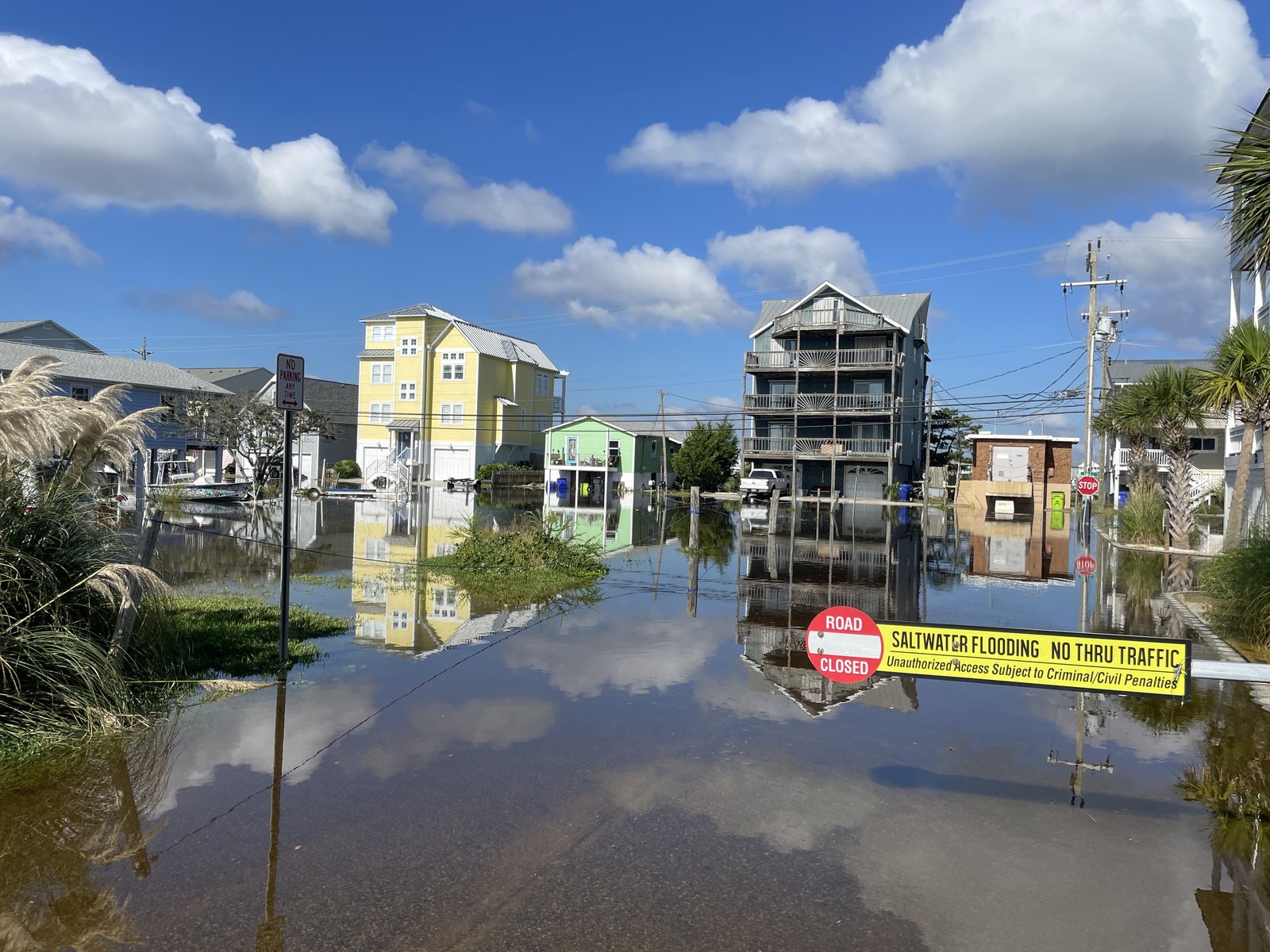
Coastal communities are experiencing more tidal flooding as sea levels rise, but the microbial risks that come with it are not well studied. As of writing this, I've led 10 sampling campaigns in Carolina Beach, NC to collect tidal floodwater. These samples were enumerated for fecal indicator bacteria using IDEXX and for fecal source markers using quantitative and droplet digital PCR. I also received a $10,000 grant through NC State's Global One Health Academy to sequence a subset of the samples for antimicrobial resistance using Oxford Nanopore to see whether floodwaters are spreading resistance genes into the community.
Digital Droplet PCR for Microbial Source Tracking
Accurately attributing fecal contamination to its source is essential for targeted public health responses. I optimized three ddPCR-based microbial source tracking assays, improving both detection efficiency and accuracy. Working in method development has taught me a lot about persistence when your results aren't what you expected, and about really understanding the inner mechanisms of how a technique functions. I've also enjoyed reaching out to people who know the techniques better to draw on their wisdom.